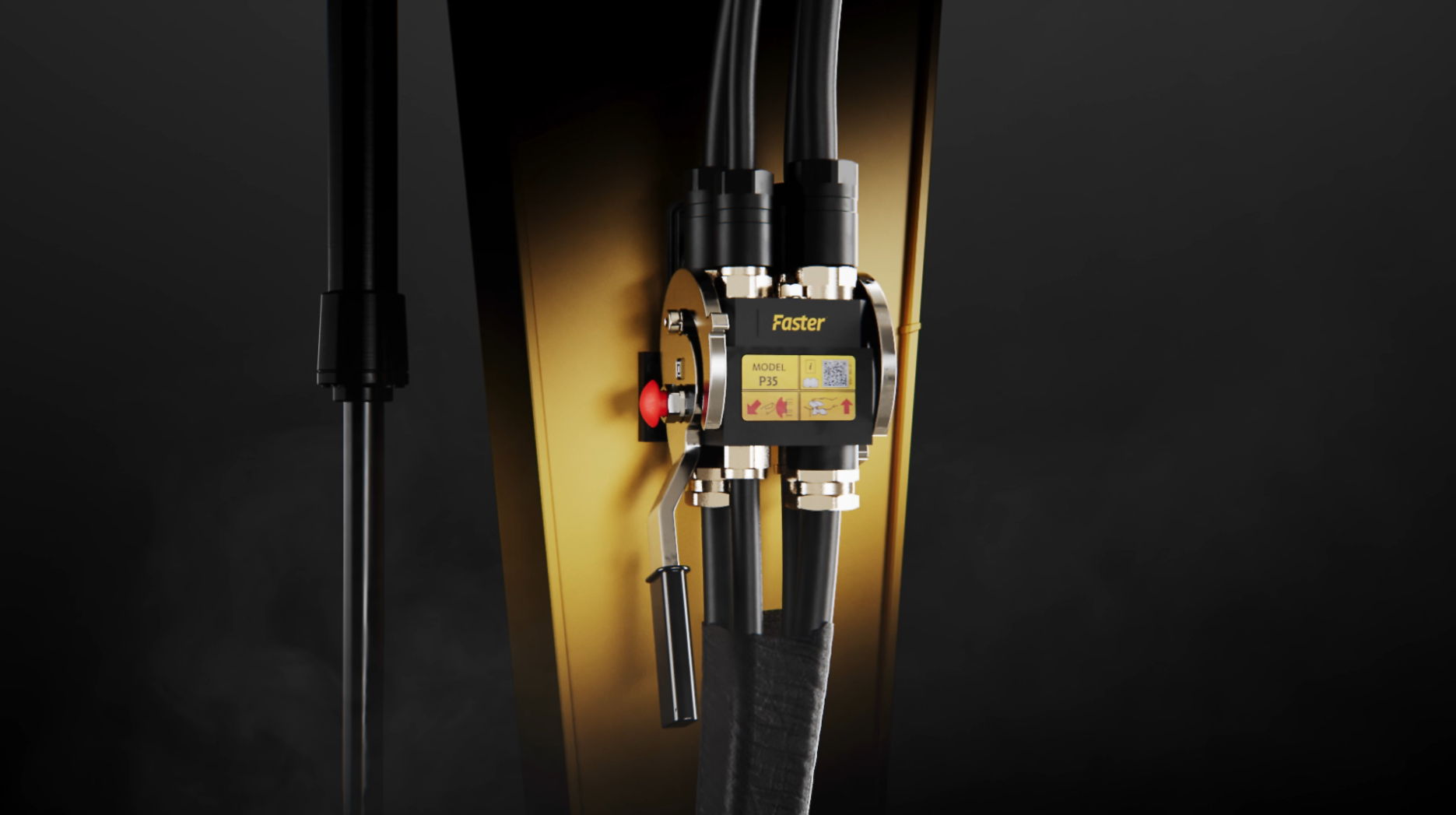
For many industrial and technology companies, communicating effectively means explaining the product through specific applications and complex mechanisms, highlighting its technical advantages. Video is often the most powerful tool: it shows what would be difficult to understand through text or static images alone.
Bringing certain video scenes to life isn’t always possible due to technical constraints, production complexity, or real-world feasibility. That can force teams to simplify the message—or even change it altogether—but that isn’t always an option.
In the project developed for Faster, the challenge was exactly this: creating those scenes, with that message.
Communication goal: one single gesture, multiple audiences
The key message was simple, yet strategic:
the product performs just as effectively in different application contexts, for different users.
The central scene of the video had to show all the audiences at once:
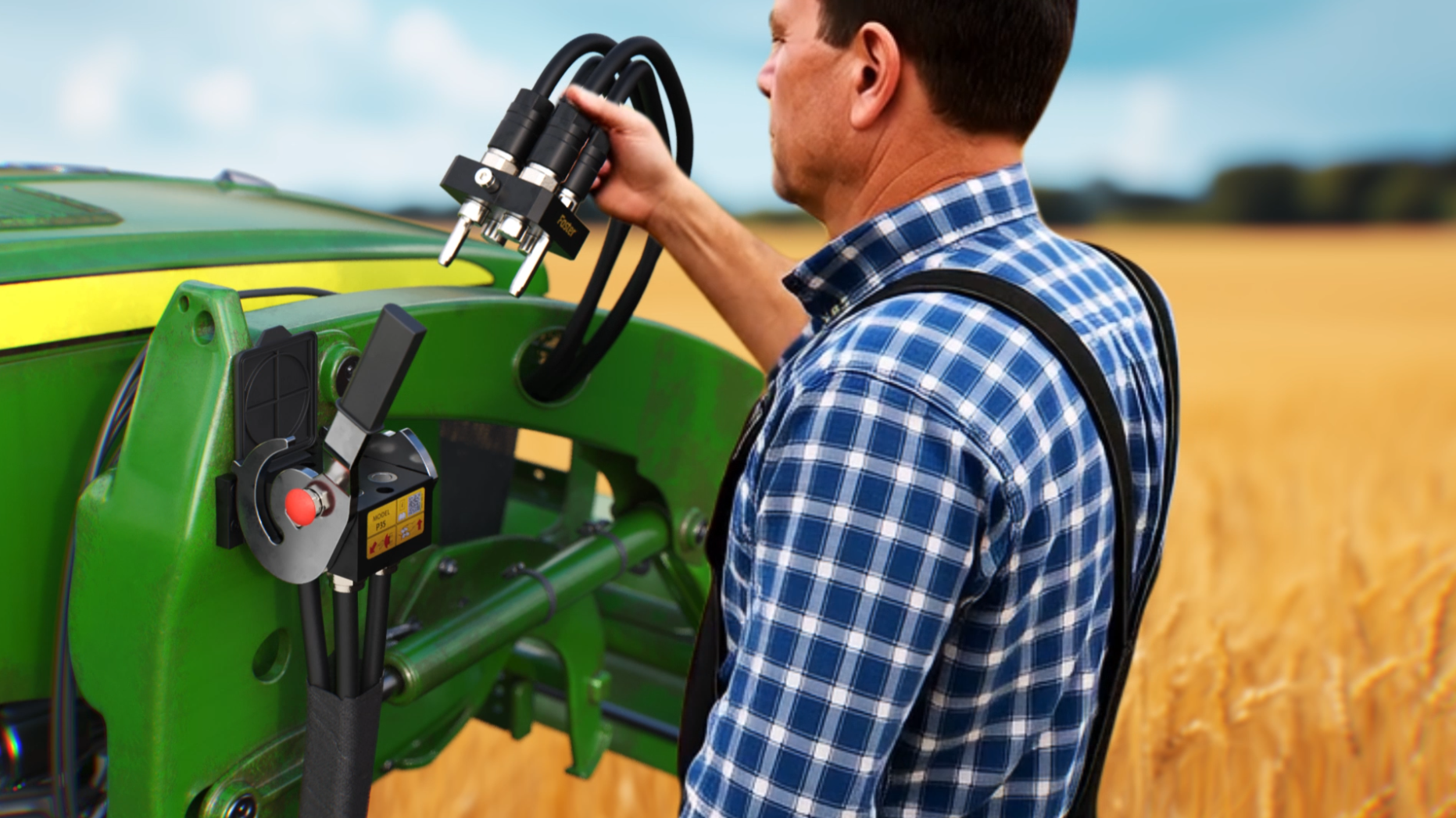
a farmer
a vineyard worker
a site foreman
other operators in different settings
All of them performing the exact same activation movement, with the exact same framing and timing. A scene that looks straightforward—yet, from a production standpoint, extremely complex.
To produce it traditionally, it would have required:
multiple real locations
5–6 different machines, each one fitted with the product
5–6 actors with consistent physical characteristics
identical shots in terms of framing, lighting, and gesture speed
controlled, repeatable environmental conditions
Achieving the same movement, the same light, and the same visual consistency across different contexts would have meant a significant investment of time and budget.
That’s where the challenge began.
The strategic question: can we do it with AI?
The idea wasn’t “use AI because it’s innovative.” The idea was to use it because it could solve a real problem: bringing different audiences into the same narrative structure, without multiplying production.
The process wasn’t immediate.
The limitations we ran into
While working with generative models, three main critical issues emerged:
Motion control
Reproducing a complex technical gesture—using both hands and requiring a precise interaction with a mechanical device—is not trivial for a generative system.Product consistency
AI tends to reinterpret what it generates. But the client’s product cannot be reinterpreted: it must be identical, technically accurate, and immediately recognizable.No “product memory”
Since this is a unique, specific device, the AI had no visual history to learn from. Each generation introduced unwanted variations.
In other words: AI performed very well with characters and environments, but struggled to respect the product’s technical accuracy.
The solution: integrating AI + 3D + motion control
The breakthrough came from combining multiple technology layers:
AI generation for characters and environments
motion capture to transfer a real, controlled, consistent movement
an advanced pipeline with tools like ComfyUI to guide the animation
inserting the correct product in post-production through a hybrid AI + 3D workflow
This allowed us to separate the variables:
narrative variable → the audiences (farmer, vineyard worker, site foreman…)
invariable element → the product, technically accurate
The result:
the same gesture, replicated across different contexts, with visual consistency and technical precision.
The real strategic value
AI wasn’t a special effect.
It was an enabling tool.
It made possible a scene that, with a traditional approach, would have required:
multiplying sets
multiplying shoots
multiplying costs
an exponential increase in timelines
In this project, instead, AI made it possible to:
keep the strategic message intact
contain complexity and timelines
automate the creation of variations (characters and environments)
ensure consistency in the technical gesture
Most importantly, it allowed us to clearly represent a core concept for the client:
one product, many applications, one single performance standard.
What this means for anyone communicating complex products
If your company needs to explain:
proprietary technologies
industrial devices
medical systems
multi-industry solutions
you’ve probably faced the same dilemma:
video is the best option, but a large-scale production can quickly become a constraint.
AI when integrated into a professional, controlled pipeline can become a strategic tool to:
reduce production complexity
preserve technical quality
amplify the message without compromise
It doesn’t replace expertise.
It enhances it.
And it’s exactly this integration of AI, 3D, and technical direction that makes a business video truly effective and actually possible.